
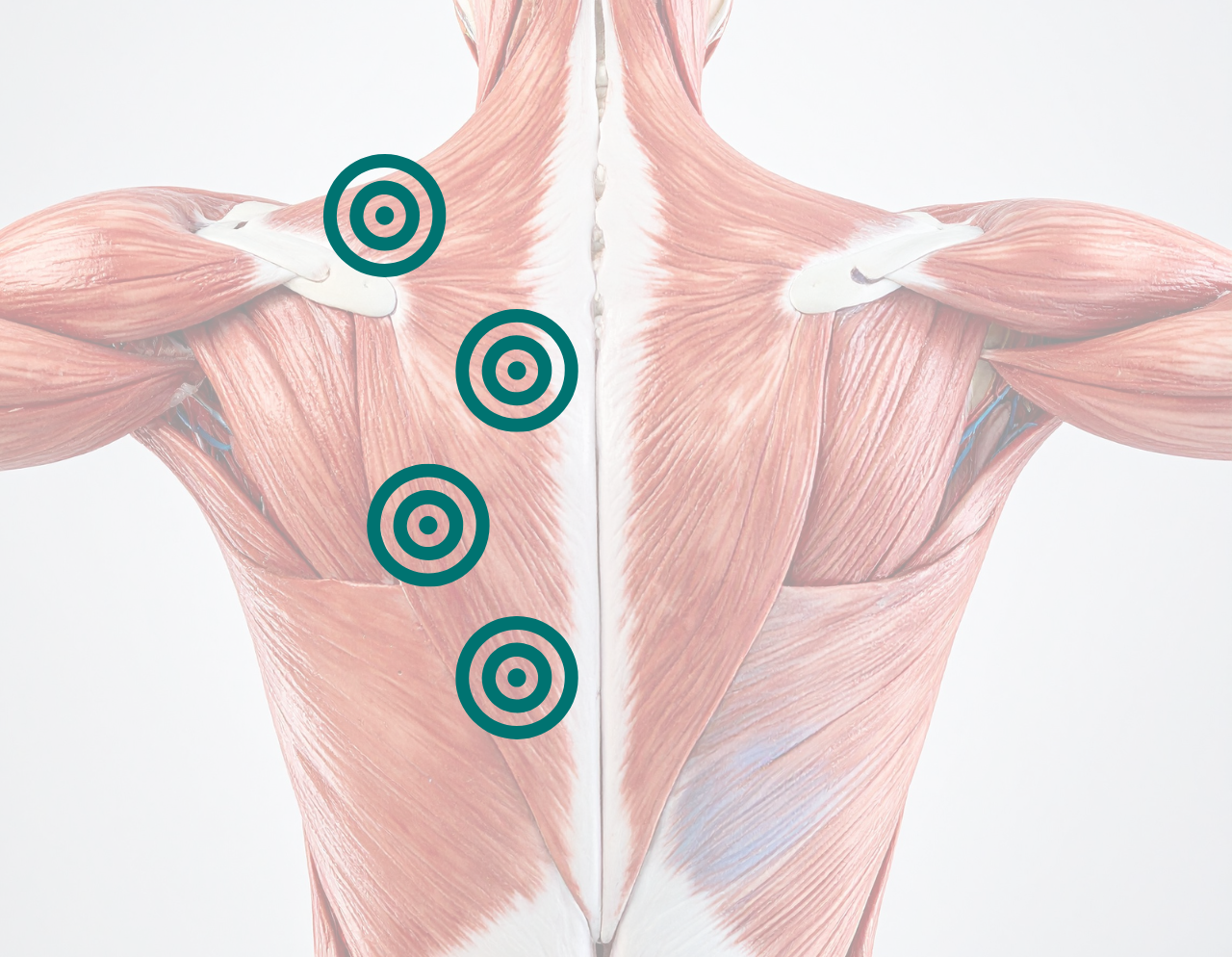
What is a trigger point?
Your muscles are made up of thousands of individual fibers that are constantly working together – contracting when you need to move, relaxing when you need to rest. But sometimes, for many different reasons, a small cluster of fibers gets stuck in a contracted state. These are trigger points.
They can range in size from barely detectable to about the size of a pea, and they tend to develop where muscle has been overworked, strained, or repeatedly stressed. They can also occur in tendons and ligaments. What makes them particularly frustrating is that they don’t always cause pain exactly where they are — often the pain travels, showing up in a completely different area of the body. This is called referred pain, and it’s one reason muscle pain can be so difficult to trace and treat.
“Trigger points don’t just cause local pain. They can contribute to headaches, neck stiffness, shoulder tightness, and low back pain — often for years before anyone connects the dots.”
Anyone can develop trigger points — whether you’re very physically active or more sedentary, whether you’re managing a chronic condition or recovering from an injury. They are one of the most common sources of musculoskeletal pain, affecting the vast majority of people at some point in their lives.
Posture & movement
Patterns of how we hold and use our bodies often underlie recurring trigger points.
Sleep & stress
Chronic stress and disrupted sleep keep the nervous system in a state that worsens muscle tension.
Past injury
Old injuries can create lasting changes in how muscles fire, contributing to trigger points years later.
Underlying conditions
Autoimmune, hormonal, and neurological conditions can all influence muscle tissue and inflammation.
What happens during a trigger point injection?
Trigger point injections (TPI) are quick, targeted procedures performed right here in the clinic. A small needle is guided precisely into the center of the trigger point — within the muscle layer of the body, beneath the skin — and a local numbing solution is injected.
This does several things at once: it interrupts the abnormal nerve signals allowing the muscle fiber locked in contraction to relax, reduces local inflammation, and stimulates the body’s own healing response in that exact area. The muscle is able to finally let go.
The procedure itself feels similar to getting a vaccine or a vitamin injection. The sites are cleaned beforehand, the injections take just seconds, and at most a small bandage covers the spots afterward. Most people are surprised by how quick and manageable it is.
1. Locate
Your provider carefully palpates the area to identify the exact trigger points — the taut bands or tender nodules within the muscle.
2. Clean & Prepare
The site is cleaned thoroughly. This step takes only a moment.
3. Inject
A small needle delivers a local anesthetic directly into the trigger point, releasing the contraction and calming nerve activity in that area.
4. Recover
You can go home and use the muscle normally. Strenuous activity is best avoided for a couple of days while the tissue settles.
How many appointments will I need?
This depends on what’s going on for you. For some people, one session is enough — especially when the trigger point is relatively new and there aren’t multiple sites involved. For more chronic or widespread pain patterns, a short series of appointments tends to get the best results.
It’s also worth noting that multiple trigger points often are treated in a single visit, even if they’re in different muscles or tissues. We’ll talk through what makes the most sense for your specific situation before we begin.
One-time relief
For a single, well-defined trigger point that hasn’t been present for long, one appointment may be all that’s needed.
Short series
For chronic or widespread muscle pain, a small series of appointments delivers the most lasting benefit.
Many people begin to feel a difference within 12 to 72 hours after their injection. Relief can last days to months — and when combined with work on the underlying cause, some people find the improvement is lasting.

MEET YOUR PROVIDER
Alex Hung, ND, LAc
Naturopathic Doctor · Licensed Acupuncturist · Chinese Medicine Practitioner
Dr. Hung is experienced in treating pain conditions and musculoskeletal dysfunctions. He utilizes acupuncture, herbal medicine, massage, naturopathic manipulations, UNDA therapy, qi gong, and diet and lifestyle adjustments in his approach to facilitate optimal health in his patients.
We treat more than just the pain
At Lilac, we’re not interested in just quieting a symptom and sending you on your way. Trigger point injections are a powerful tool — but they’re most effective as part of a larger conversation about what’s driving the pain in the first place.
That means taking time to think through questions like: Has posture or movement pattern played a role? Is there a history of injury, surgery, or an underlying condition affecting the muscles? Is sleep disruption or chronic stress making things harder to resolve? Are there signs of inflammation that deserve a closer look?
Understanding the full picture is how we get to results that last — not just a temporary break from pain.
Trigger point injections are offered alongside the manual therapies and whole-person care available at our clinic. If acupuncture or hands-on bodywork is a better fit for your situation, we’ll talk through what makes the most sense together.
You might benefit from TPI if…
Trigger point injections may be a good fit if you’ve been living with muscle pain, tightness, or tenderness that hasn’t responded well to other approaches — or if you’re dealing with symptoms that seem to travel or radiate in ways that are hard to explain.
Common reasons people come in for TPI
- Chronic neck, shoulder, or low back pain and tension
- Tension headaches or migraines with a muscular component
- A persistent “knot” that won’t release with massage or stretching
- Pain that radiates, travels, or causes numbness and tingling
- Muscle tightness following an injury, surgery, or period of high stress
- Pain patterns associated with fibromyalgia
- Getting stuck at a plateau in physical therapy
If you’re unsure whether TPI is the right next step, that’s a completely fine place to start. A conversation with your provider is always the first step — we’ll figure out together whether this approach fits what you’re experiencing.
Ready to get out of the pain cycle?
Contact us to schedule a free phone consult with Dr. Hung and let’s talk through what your body needs.
Call or Text: (971) 229-2140
Email: hello@lilacpdx.com